How to write a motorcycle repair estimate
Updated 2026-11-07 · By the Motorcycle Repair Estimator team
A motorcycle estimate is a different document from a car estimate, and the difference is access. On most bikes the expensive part of the job is getting to the thing that is broken, and an estimate that does not say so out loud looks arbitrary to the customer. Here is the sequence shops use, with the lines that most often get missed.
Step 1: Identify the machine and the concern
Model year matters more on bikes than people expect: engine internals, calipers, fork diameters and ECU mapping change inside a single model name. Record year, make, model, variant, VIN and odometer, and note non-standard parts — an aftermarket exhaust or crash protection changes access time.
Then write the concern in the customer's words: when it happens, at what engine or road speed, hot or cold, since when. "Rattle from the top end at 3,000 rpm when warm" is a diagnostic lead; "engine noise" is not. Ask what has been tried — previous repairs are a common hidden cost.
Step 2: Inspect the whole machine
Walk the bike before quoting, noting condition that affects the work or that you do not want blamed on you:
- Corrosion on fasteners, especially exhaust studs, caliper bolts and fork caps
- Rounded bolt heads and non-original hardware
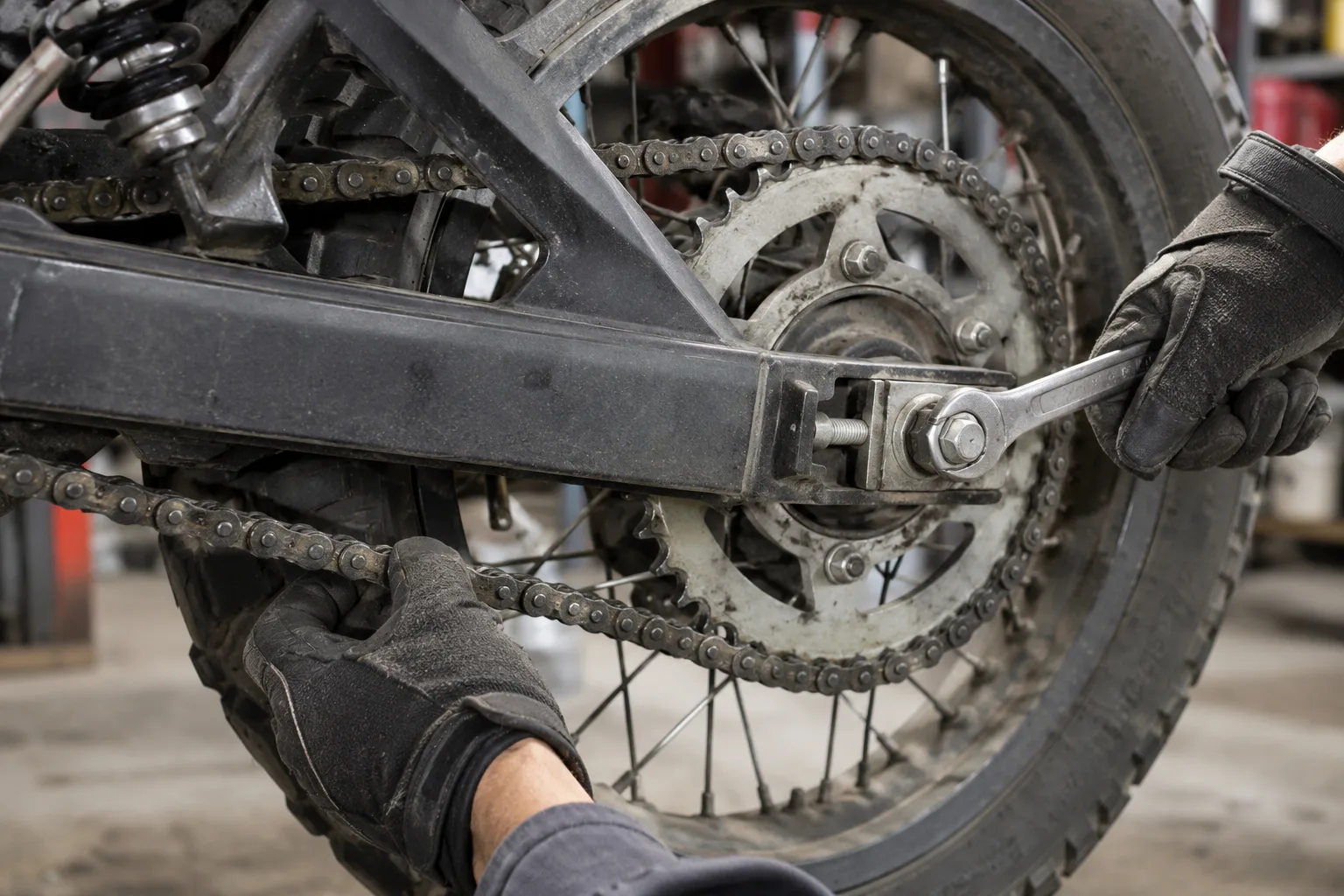
- Chain and sprocket condition, tire wear and date codes
- Cracked bodywork, broken fairing tabs, fluid leaks and their source
Photograph all of it, broken fairing tabs especially: they break further during removal, and who broke them will come up.
Step 3: Work out what has to come off
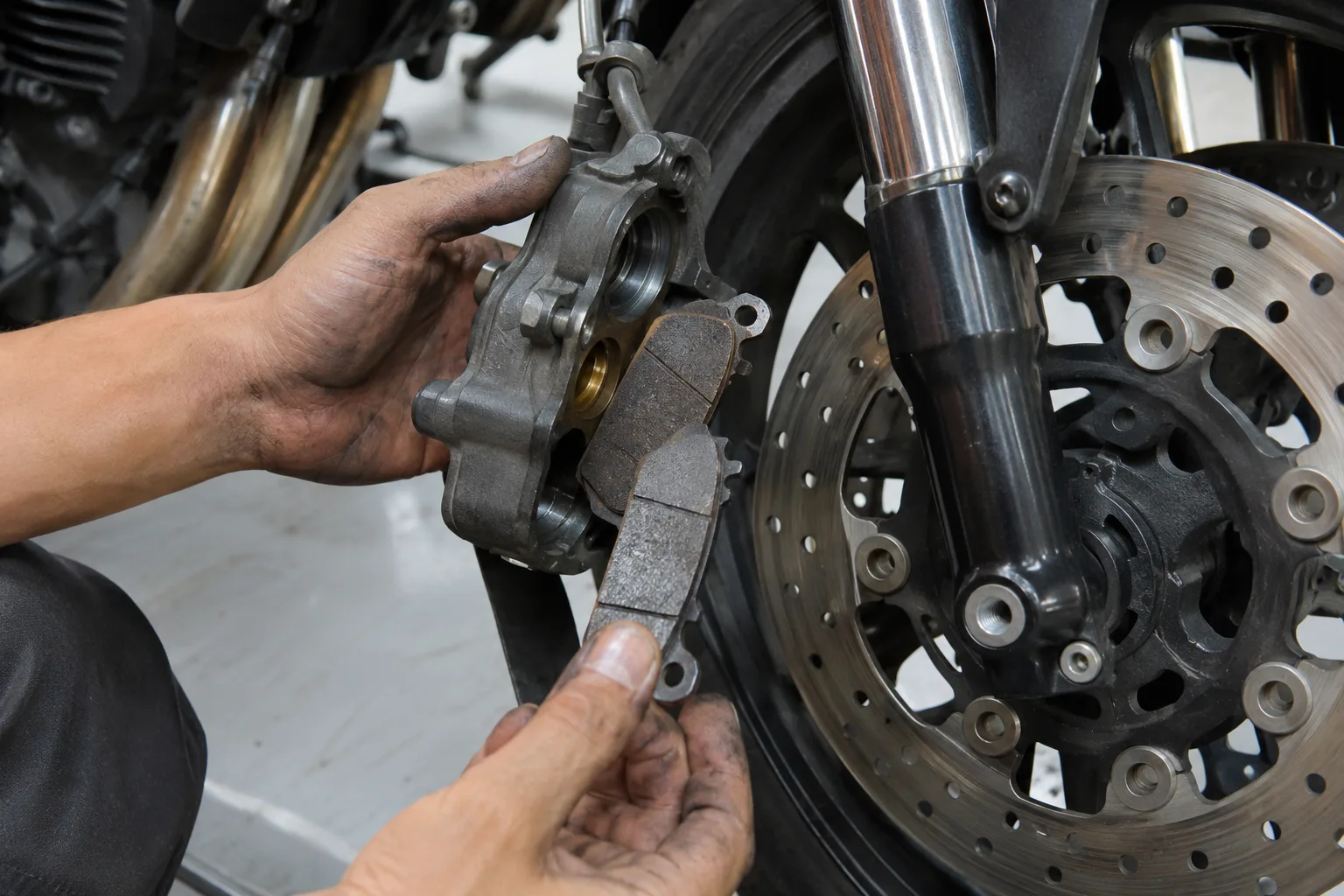
This step has no automotive equivalent, and it is where the estimate is made or lost. List what must come off: bodywork, seat, tank, airbox, radiator, exhaust, wheels. Then apply the rule that governs motorcycle estimating: access is charged once. The customer pays for the fairing coming off and going back on one time, and each operation underneath carries only its own work.
Step 4: Quote teardown as its own line
Teardown gets a named line with hours and a rate, and the estimate says what happens if the job stops there:
- If the repair is approved, teardown is part of the total.
- If the customer declines afterwards, they owe the teardown and reassembly. Say that in writing before anything comes off.
- Where the repair is unknown, the first estimate covers teardown and inspection only, with a not-to-exceed figure.
Because access is already paid for, list the jobs that become cheap while the bike is apart as optional lines: plugs, air filter, coolant, carburetor cleaning, a valve check if the interval is near. Price each without the access time. That is not an upsell tactic, it is the arithmetic of a motorcycle service.
Step 5: List labor by operation
One line per operation with hours and rate, and diagnostic time at its own rate if you bill it differently. For operations you have timed, bill flat rate from your own recorded time. For diagnosis, electrical work or an unfamiliar machine, bill hourly with a range and a not-to-exceed. Published flat-rate data for motorcycles is far thinner than for cars, so most independents rely on their own job history — our motorcycle labor time guide covers building that record.
Step 6: Parts as material lines
Every part gets its own line with quantity, part number, price and type: OEM, aftermarket, or used. Never fold parts into labor — it hides the margin, hides the part choice and makes the labor line look wrong.
State the type on safety-critical components. Brake pads and lines, tires, suspension and steering head bearings are where OEM versus aftermarket is a safety decision rather than a budget one; bodywork, levers and grips are where aftermarket usually makes sense. See OEM vs aftermarket motorcycle parts. Include small hardware too: crush washers, O-rings, exhaust and valve cover gaskets. Missing small parts are the commonest reason a job stalls waiting on a $4 item.
Step 7: Consumables and a fastener allowance
Fluids and filters are materials bought for this machine, not background shop supplies. Each gets a line with quantity and specification: engine oil and grade, oil filter and crush washer, brake fluid and DOT rating, fork oil volume and weight, coolant, chain lube, gaskets, air filter, plugs. The test is whether you can point to a quantity — if you cannot (rags, brake cleaner, solvent, gloves, waste disposal), it belongs in shop supplies.
Then, on anything with age or winter miles, build in time for hardware that will not move: heat, penetrating fluid, extractors, drilling and re-tapping. State it as hours with a limit. A customer who approved a fastener allowance reacts very differently to a snapped exhaust stud than one who did not.
Step 8: Supplies, sublet, tax and terms
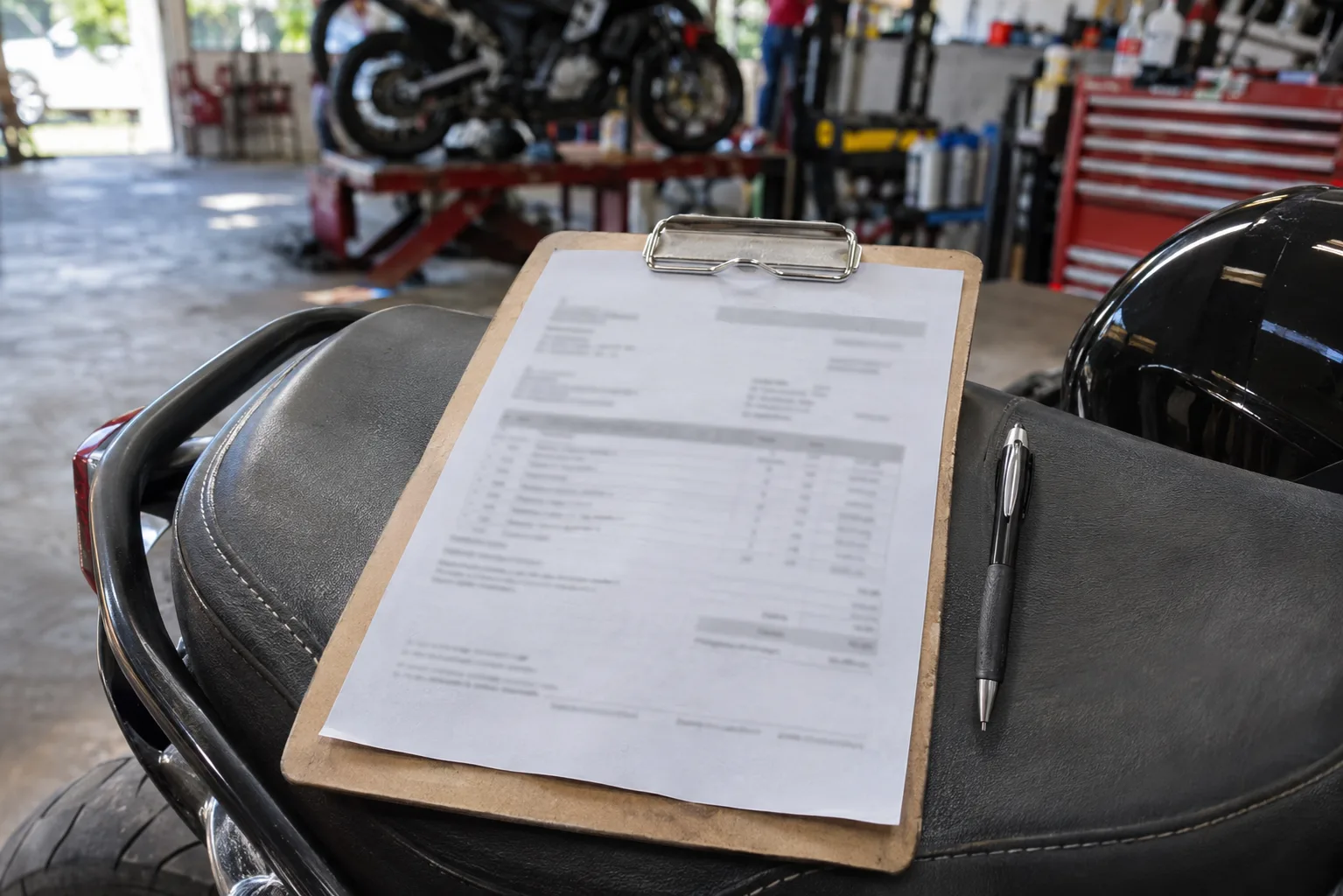
Shop supplies go on as a named line with the calculation stated — a percentage of labor, around 6% being common practice. Do not calculate it on parts; see motorcycle shop supplies fee. List sublet work with the vendor named: wheel truing, machine work, powder coating. Then parts and labor subtotals, tax, the total, and the terms:
- How long the estimate is valid, given parts prices and availability
- That it covers the stated concern and visible condition
- How additional work gets approved and recorded
- What the customer owes if they decline after teardown
- Your warranty on parts and labor
Step 9: Review it out loud, then get approval
Walk the customer through the teardown line and the consumables — the two they least understand and the two that generate the calls. Then take a signature or documented electronic approval.
When teardown finds more, stop. Write a dated addition listing the extra parts and labor, show photos, and get approval before continuing. If approval comes by phone, record who gave it, when and for how much.
Common mistakes
- One lump labor figure, so the access time is invisible
- Fairing removal billed against every operation underneath it
- Fluids and filters absorbed into labor or into shop supplies
- Extra work done because the bike was apart, unapproved
Doing it faster
Use the free motorcycle estimate template for a blank form, or build the first draft from your phone with Motorcycle Repair Estimator Moto+: photograph the bike, add a note, and get an itemized estimate with teardown, labor, parts and consumables on separate lines at your own rates. Review the hours against the machine before sending.
Frequently asked questions
How do you write a motorcycle repair estimate?
Record the machine with VIN, model year and mileage; write the customer's concern in their words; inspect and photograph; decide what has to come off to reach the work and quote that teardown as its own line charged once; list each labor operation with hours and rate; list parts as material lines with type; list consumables with quantities; add a fastener allowance on older bikes; add supplies, sublet and tax; set a validity period; get written approval.
Should teardown be a separate line on the estimate?
Yes. Teardown is labor the customer owes whether or not the repair goes ahead, and on a faired bike it can exceed the repair itself. Put it on the estimate as its own line with hours, and state what the customer owes if they decline the repair once the bike is apart.
Do you charge fairing removal for every job underneath it?
No. Access is charged once for everything done under the same bodywork. That is also why it is worth quoting the deferred work on the same estimate: the expensive part is already paid for, so plugs, air filter and coolant become comparatively cheap.
What do you do when a bolt snaps mid-job?
Stop and call. On an older bike the estimate should already carry an allowance for seized or corroded fasteners, which gives you room; when the damage exceeds it, write a dated addition describing the extra parts and labor and get approval before continuing. Record who approved it, when and for how much.
Estimates and invoices in minutes
Motorcycle Repair Estimator turns a photo into an itemized estimate, then an invoice. Free to download.
More in for shops