Free motorcycle repair estimate template
Updated 2026-11-07 · By the Motorcycle Repair Estimator team
Build a written motorcycle estimate below with teardown, labor by operation, parts, consumables and shop supplies on separate lines, then download it as a PDF for the customer to approve. Below the generator: what belongs in each section, why access is charged once, and the lines motorcycle estimates most often miss.
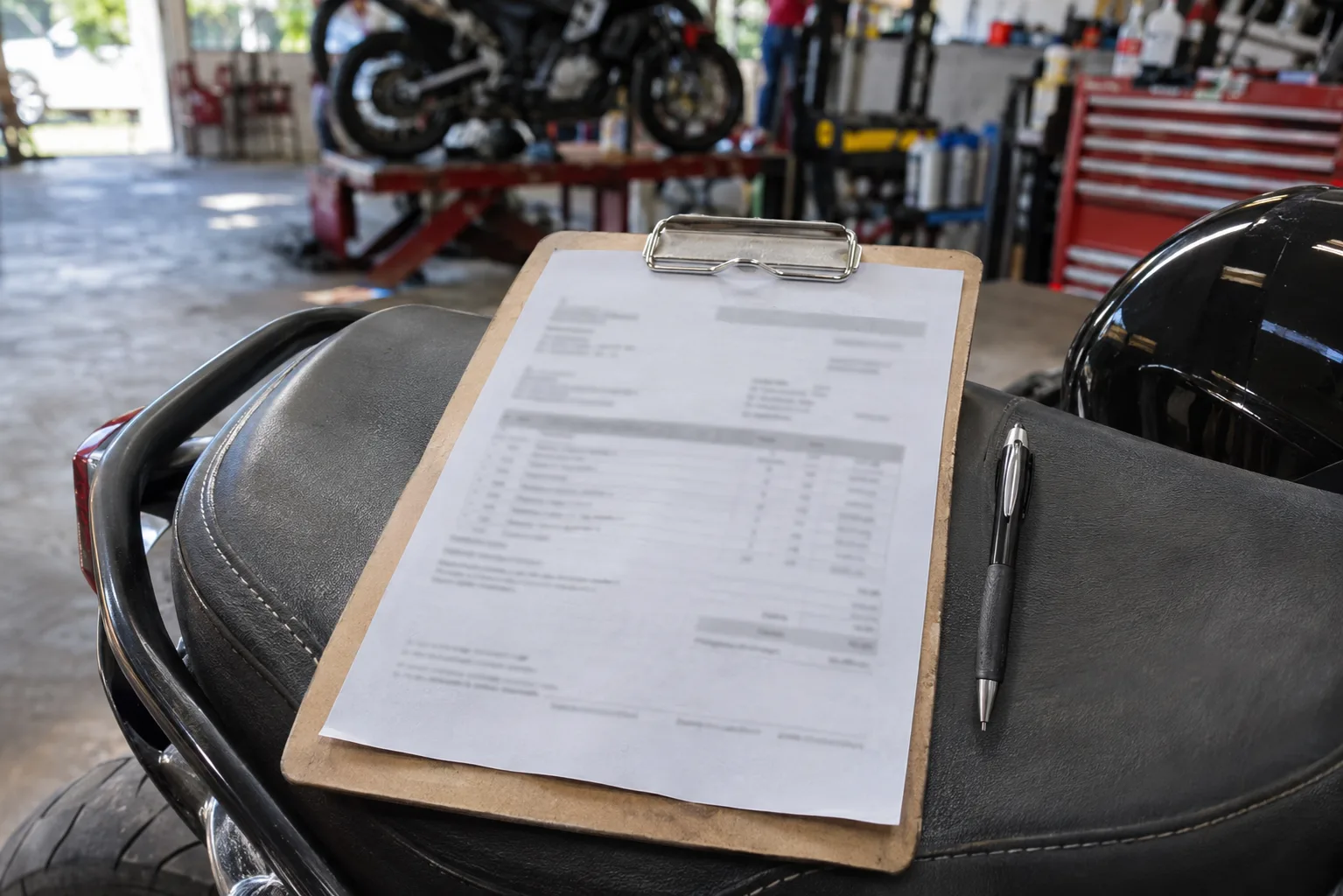
A written estimate is the ceiling on what you can bill without another conversation, and on motorcycle work it also has to explain something the customer cannot see: how much of the price is getting to the job rather than doing it. The generator below is laid out for that — add the machine and VIN, put teardown on its own line, list operations, parts and consumables, and download a PDF with a signature line.
What a motorcycle estimate should contain
- Shop details: name, address, phone, your state registration number if your state issues one, estimate number and date.
- Customer and machine: name and contact; year, make, model and variant; VIN; odometer reading. Note any non-standard parts fitted, because an aftermarket exhaust or crash protection changes access time.
- The concern, in the customer's own words, with the conditions: engine speed, hot or cold, since when.
- Teardown or access: its own line with hours, charged once for everything done underneath.
- Labor: one line per operation with hours and the rate, with diagnostic time at its own rate if you bill it separately.
- Parts: each with quantity, part number where you have it, price and type — OEM, aftermarket with the brand, or used.
- Consumables: each with a quantity. Engine oil, oil filter, brake fluid, fork oil, coolant, chain lube, gaskets, spark plugs, air filter.
- Fastener allowance on older machines, stated as hours, with what happens if it is exceeded.
- Shop supplies: the amount and the calculation, typically a percentage of labor with a cap.
- Sublet: wheel truing, machine work, coating, upholstery, with the vendor named.
- Tax and total, with parts and labor subtotals shown separately.
- Terms: validity period, what happens if the customer declines after teardown, how extra work gets approved, and your warranty.
Access is charged once
This is the rule that makes a motorcycle estimate readable. Work out what has to come off to reach the job — bodywork, seat, tank, airbox, radiator, exhaust, wheels — and put that removal and reassembly on a single teardown line. Everything done underneath it then carries only its own labor.
Two things follow. Billing fairing removal against each operation separately is double-charging, and owners notice. And it gives you the honest version of the upsell: once the panels are off, plugs, air filter and coolant are comparatively cheap, so quote them as optional lines on the same estimate.
Teardown and the declined-repair conversation
Put this in writing before anything comes off the bike:
- If the repair is approved, teardown is part of the total.
- If the customer declines after teardown, they owe the teardown and the reassembly, at the stated hours.
- Where the repair is not yet known, the first estimate covers teardown and inspection only, with a not-to-exceed figure the customer approves.
Parts and consumables are different lines
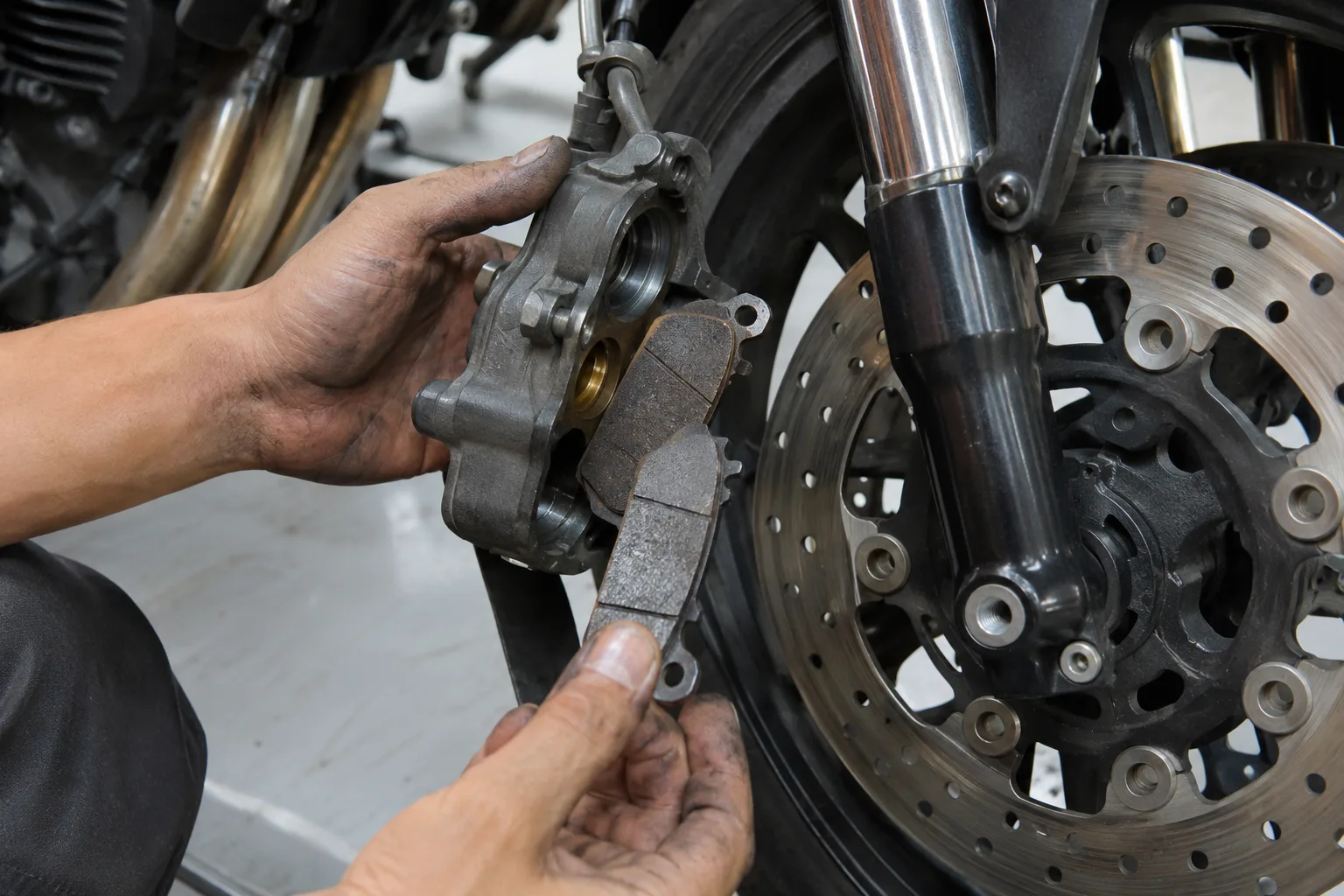
Parts are components: pads, seals, bearings, sprockets, a chain, a filter housing. Consumables are the measured materials the job uses: the fluids, the filters, the gaskets, the crush washers. Both are material lines, both carry quantities, and neither belongs inside labor.
The practical test for whether something is a consumable rather than a shop supply is whether you can state a quantity for this machine. Brake fluid, yes — one line, with the DOT rating and the volume. The brake cleaner used to wash the caliper down, no — that is in the supplies percentage. Motorcycle shop supplies fee covers the calculation and the disclosure.
Part type on safety-critical components
Name the type on every parts line, and have the conversation out loud on brakes, tires and suspension. Those are the components where OEM versus aftermarket is a safety judgment rather than a budget one; bodywork, levers and mirrors are where aftermarket is usually the sensible answer. If the customer picks a budget option against your recommendation, write down that they picked it. OEM vs aftermarket motorcycle parts goes through where the line sits.
Fastener allowance
On any machine with age or winter miles, build in time for hardware that will not move: heat, penetrating fluid, extractors, drilling and re-tapping, replacement bolts. State it as hours with a limit. Exhaust studs, caliper bolts, fork caps and axle nuts are the usual offenders. A customer who approved an allowance reacts very differently to a snapped stud than one who did not.
Validity period
Powersports parts availability is less predictable than automotive, and a part that was in stock when you quoted can be on back order a week later. Put an expiration on every estimate — 15 to 30 days is common — and note that the price assumes the stated part type, because swapping aftermarket for OEM changes the total.
Additions after teardown
A visual estimate prices what you can see. Say so on the document: "Estimate covers the stated concern and visible condition; anything found during teardown will be quoted before repair." When you find more, stop, write a dated addition listing the extra parts and labor, show photos, and get approval before continuing. If approval comes by phone, record who gave it, when and for how much.
Approval and your state's rules
Get a signature or a documented electronic approval before work starts. Several states make written estimates and prior authorization a legal requirement for vehicle repair, with thresholds and specific disclosure language that differ by state, and some require the customer's consent before the final bill exceeds the estimate. Check your state's automotive repair or consumer protection agency for the rules that apply to motorcycle repair where you operate, since coverage and thresholds vary.
From estimate to invoice
Once approved, the estimate becomes the repair order and then the invoice. If all three match, payment is simple. For the full method behind each section, read how to write a motorcycle estimate, and set your numbers first with the labor rate calculator.
Frequently asked questions
What should a motorcycle repair estimate include?
Shop and customer details, the bike's year, make, model, variant, VIN and odometer, the concern in the customer's words, teardown or access as its own line, each labor operation with hours and rate, parts with quantity and type, consumables with quantities, a fastener allowance on older machines, shop supplies with the calculation stated, sublet work with the vendor named, tax, total, a validity period and a signature line.
Why is teardown a separate line?
Because it is work the customer owes for whether or not the repair goes ahead, and on a faired bike it can be most of the labor. A named teardown line lets you state what the customer owes if they decline the repair once the machine is apart, which is the conversation nobody wants to have for the first time afterwards.
How long should a motorcycle estimate be valid?
There is no universal rule. Many shops use 15 to 30 days, because parts prices and availability move and powersports parts can go to back order without warning. Whatever you pick, print it on the estimate and re-quote after it expires.
Can the customer decline after teardown?
Yes, and the estimate should say what that costs. Teardown plus reassembly is real labor already performed. Stating it before the panels come off turns a potential dispute into a term the customer already agreed to.
Write the estimate from a photo
Photograph the bike, add a note, and get an itemized estimate with teardown, labor and consumables on separate lines.
More in for shops