OEM vs aftermarket motorcycle parts
Updated 2026-11-07 · By the Motorcycle Repair Estimator team
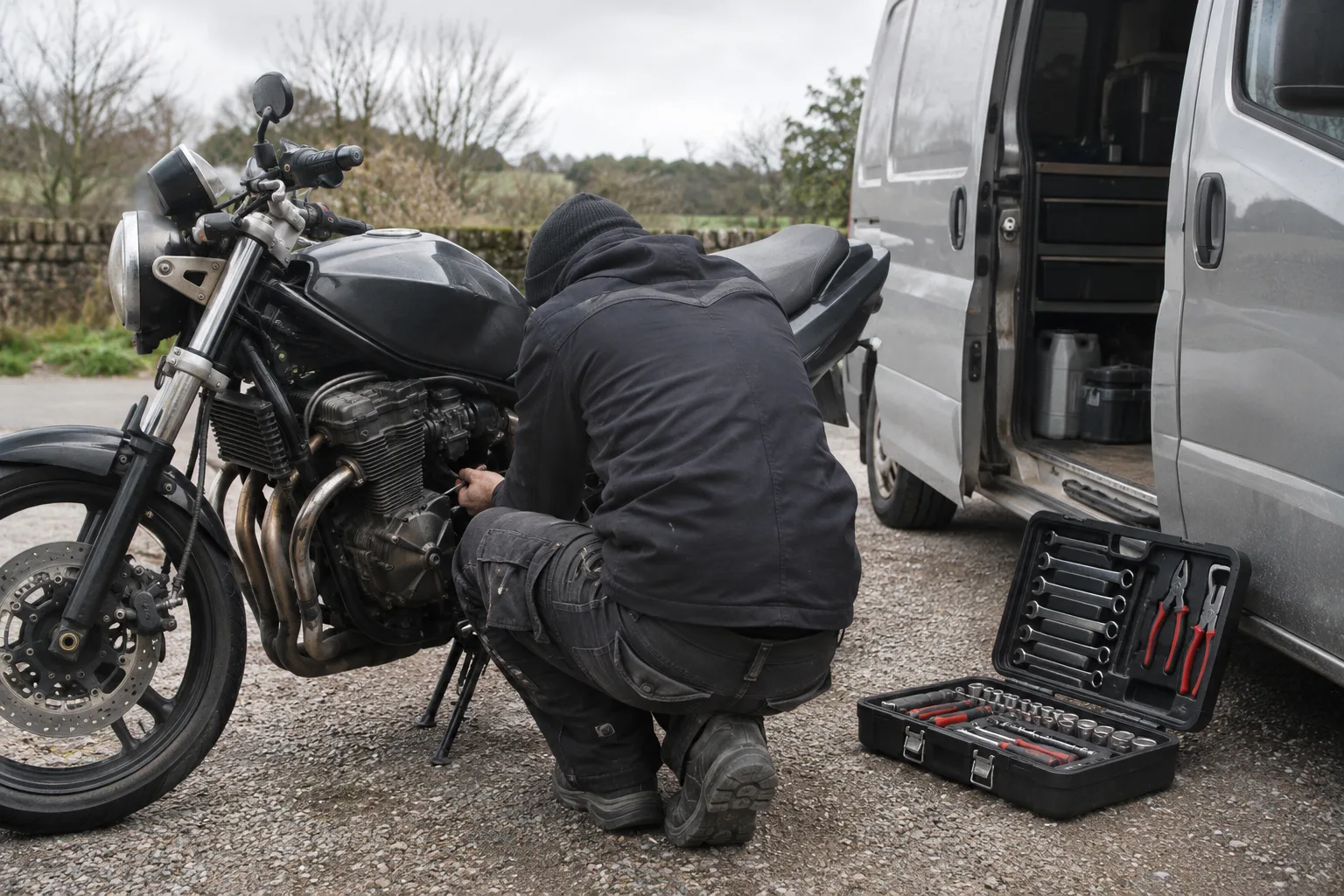
On a motorcycle the OEM versus aftermarket question is not mainly a budget question. It is a question about which parts you would rather not have fail at speed, with no cage around you. The practical line most experienced shops draw runs between safety-critical systems, where the part choice is a safety decision, and cosmetic and convenience parts, where good aftermarket is often the obvious answer.
What the terms mean
- OEM. A part made by or for the manufacturer that built the bike — the same kind of part fitted on the production line, bought through the dealer parts network.
- Aftermarket. A part made by another company. The range is enormous, from specialists whose products are the reference standard in their category to unbranded parts of unknown origin.
- Used or salvage. An original part removed from another machine. Often the only realistic source for discontinued bodywork and older model parts.
- Rebuilt or remanufactured. A used component restored for service, common for starters, regulators, carburetors and master cylinders.
A complication specific to motorcycles: in much of the aftermarket, the aftermarket is the premium option. Suspension, exhaust, brake pads, chains and sprockets are categories where specialists sell parts that outperform the original fitment, because the factory built to a price. That is the opposite of the automotive assumption, and it is why a blanket rule in either direction gets motorcycle work wrong.
Where to draw the line
| Part | Default recommendation | Reasoning |
|---|---|---|
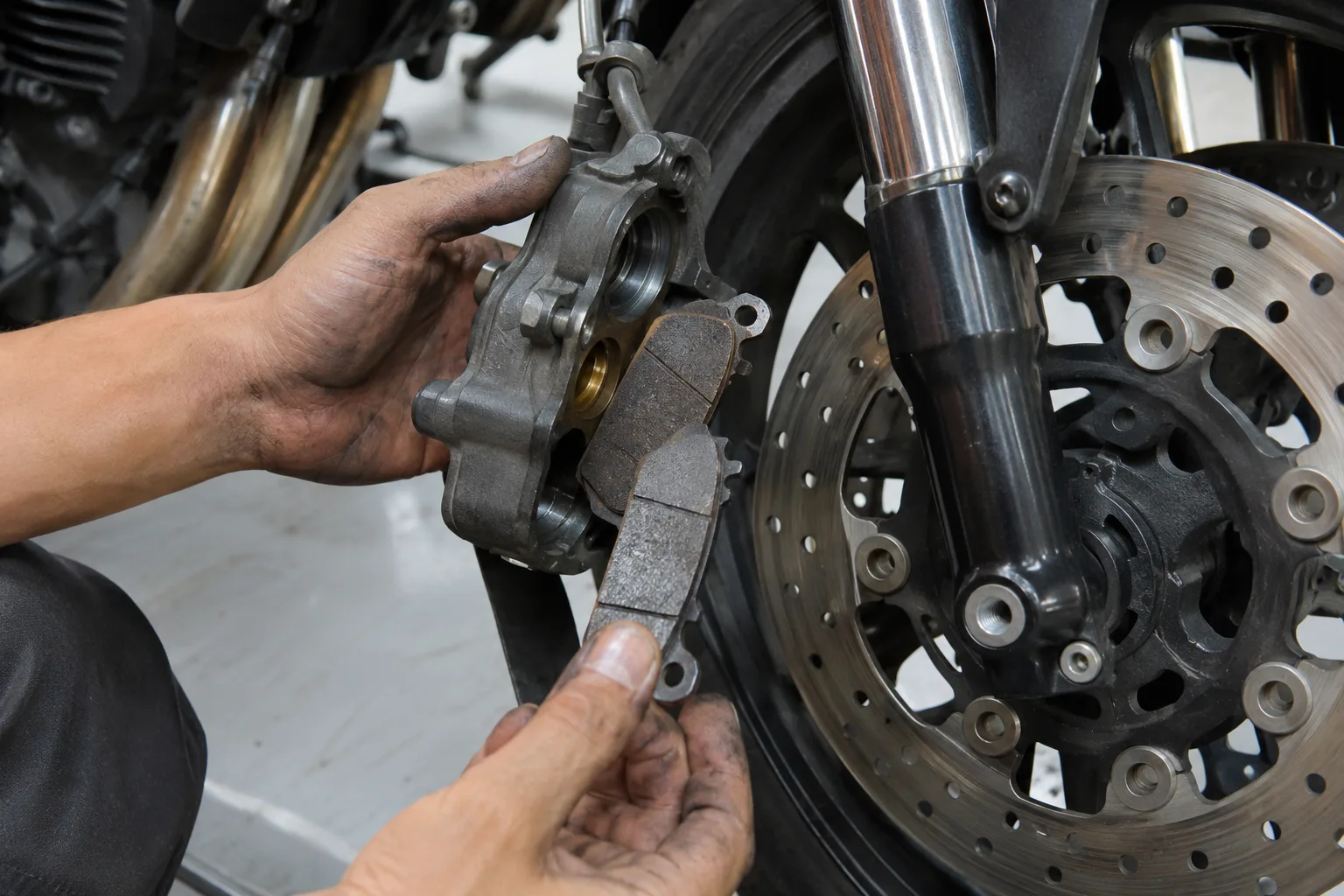
| Brake pads | OEM or a known braking specialist | Friction compound determines bite, fade resistance and rotor wear. Unknown compounds are a genuine risk |
| Brake lines, master cylinders, calipers | OEM, or certified replacements | Hydraulic integrity. There is no graceful failure mode |
| Brake and clutch fluid | Any reputable brand to the correct DOT specification | Specification is what matters, not the badge |
| Tires | Known manufacturer, correct size, speed and load rating, current date code | The only contact with the road. Fitment and rating are non-negotiable; brand choice is legitimate preference |
| Fork internals, seals, springs | OEM or a suspension specialist | Dimensional tolerances; a seal that is almost right leaks or binds |
| Wheel and steering head bearings | OEM or a named bearing manufacturer | Steering feel and structural integrity. Cheap bearings fail early and fail badly |
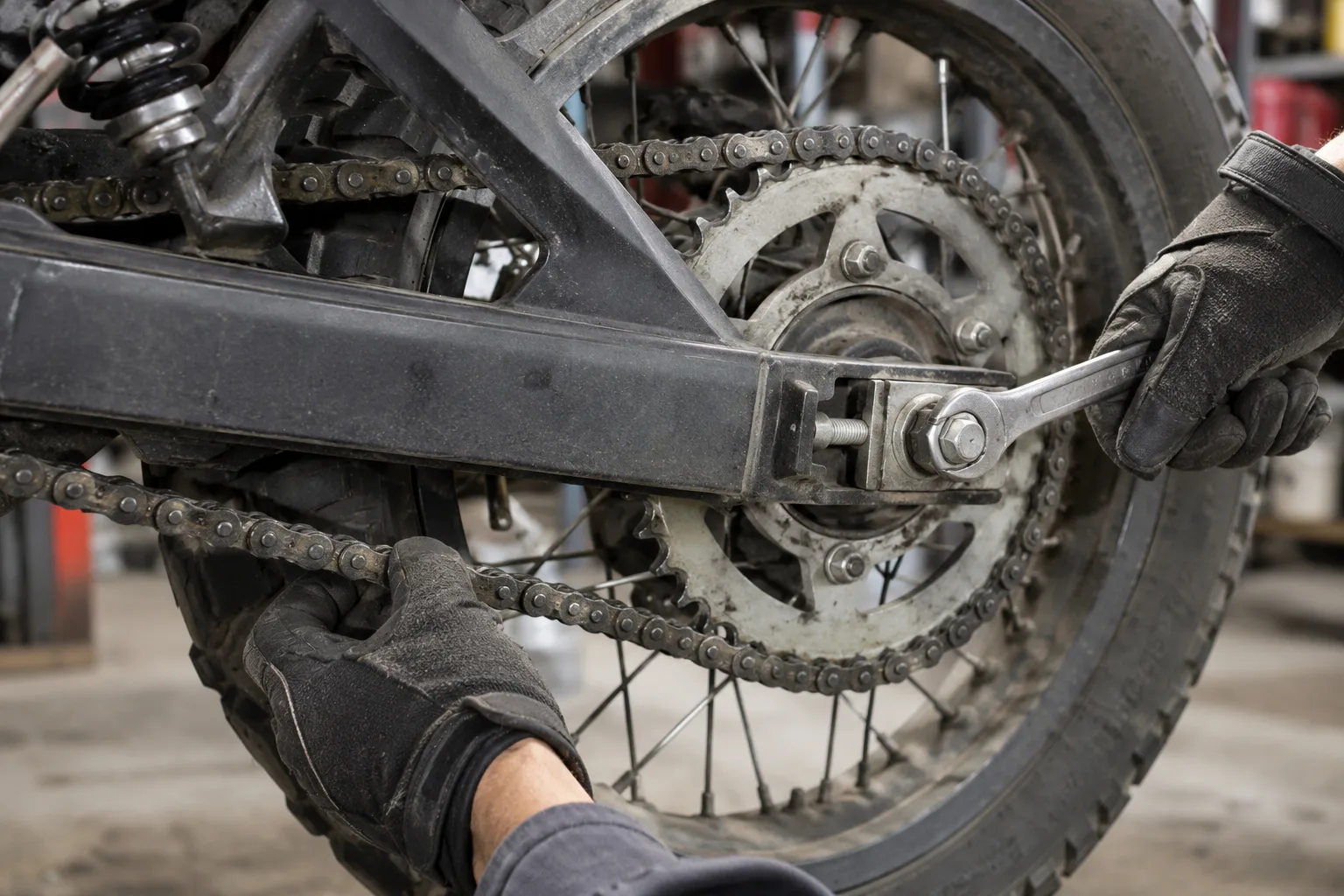
| Chain and sprockets | Established aftermarket, as a matched set | Specialists dominate this category legitimately. Mixing worn and new is the real mistake |
| Engine internals and gaskets | OEM for internals; reputable gasket brands acceptable | Clearances and material specification |
| Electrical and engine management | OEM | Regulators, stators, sensors and CDI units are where cheap parts cause intermittent faults you will chase for hours |
| Fairing panels and cosmetic bodywork | Aftermarket or used, with the customer's agreement | Fit quality varies; appearance and cost are the trade-offs, not safety |
| Levers, mirrors, grips, footpegs | Aftermarket | Preference and price. Check lever and pedal reach is still usable |
| Oil and air filters | OEM or reputable aftermarket | Filtration and bypass behavior matter; unbranded filters are a false economy on an engine |
The fitment problem with aftermarket bodywork
This costs shops real money. Aftermarket fairing panels and replica bodywork often need work to fit: holes that do not line up, tabs in slightly wrong positions, panels that will not sit flush. The part is cheap; the labor to make it fit is not, and it usually was not quoted.
If a customer supplies aftermarket bodywork, or chooses it to save money, put the fitting time on the estimate as a separate allowance and say what happens if it exceeds the allowance. The same applies to used panels, where paint match becomes the issue instead.
Customer-supplied parts
Motorcycle owners buy their own parts more often than car owners do, and it is worth having a written policy:
- Say whether you fit them at all. Many shops decline customer-supplied safety-critical parts outright, and that is a defensible position to state up front rather than case by case.
- No warranty on the part. If you did not supply it, you cannot warrant it. Your labor warranty is separate and should be stated separately.
- Labor is billed again if the part is wrong. A part that turns out to be the wrong variant means the job is done twice. Say so on the estimate.
- Inspect before you fit. Check tire date codes, brake pad compound markings and the obvious signs of a counterfeit. Refusing a part at the counter is cheaper than refusing it on the lift.
Counterfeits
Parts sold as OEM that are not are a known problem, concentrated in the categories where it matters: brake pads, bearings, chains, electrical components. Buying through established distribution rather than the cheapest listing is the main defense, and the visible signs — packaging, printing, part markings, weight — are worth knowing for what you buy most. A price far below market for an OEM-marked part is itself the diagnosis.
Putting part type on the estimate
Clear part labeling protects you regardless of what any disclosure rule in your state requires:
- Every parts line names the type: OEM, aftermarket with the brand, used, or rebuilt. Parts go on as material lines, never bundled into labor.
- On brakes, tires and suspension, have the conversation and record the outcome. If the customer chooses a budget part against your recommendation, write down that they chose it.
- State your warranty by part source: what you warrant on parts you supplied, what you warrant on labor, and what you do not warrant on parts the customer brought.
- Carry part type through to the invoice. It matters later, for warranty questions and when the machine is sold.
- Where a price difference is large, show both options on the same estimate. A customer who can see $90 against $35 for brake pads and hear why generally makes the right call.
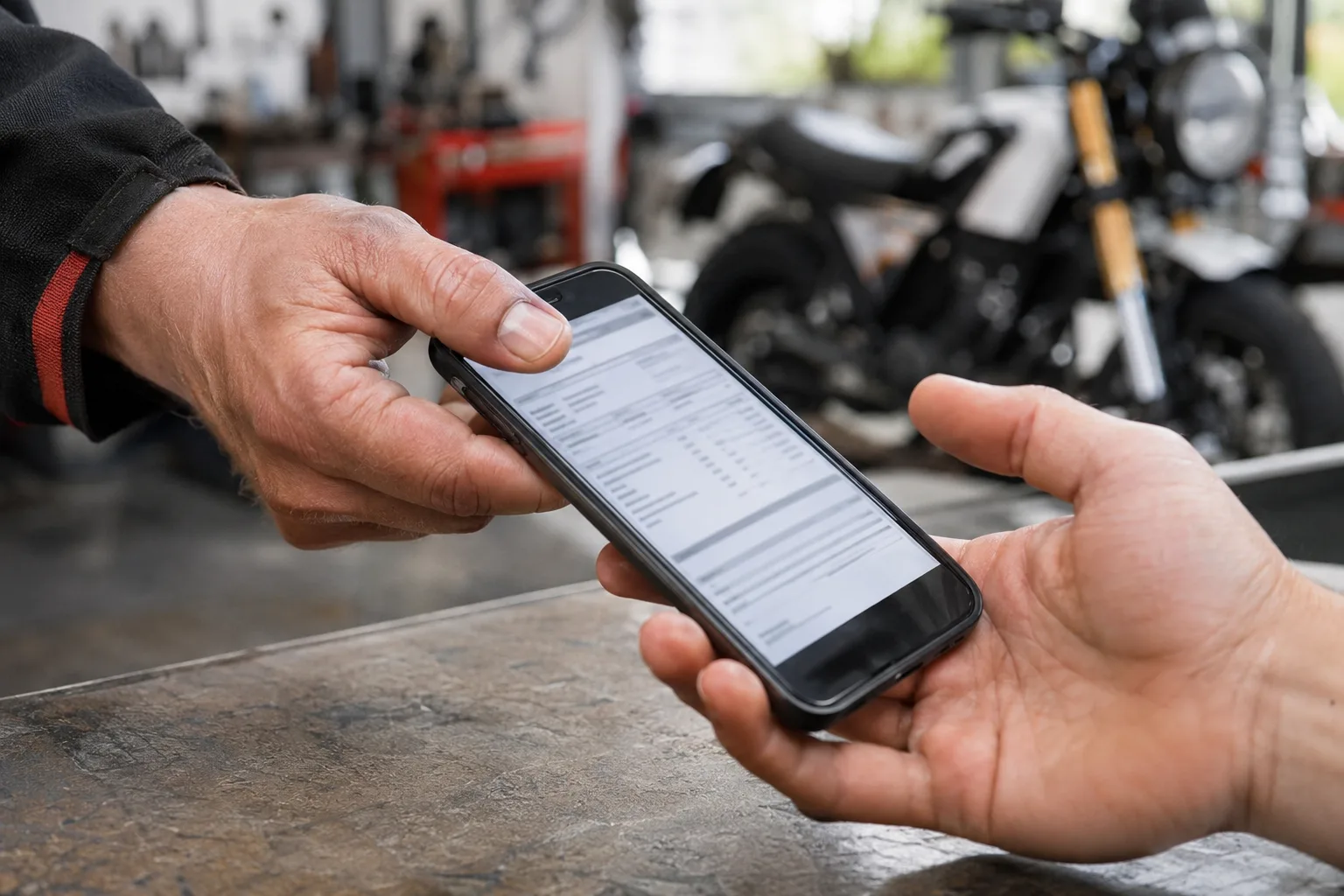
For how this fits the rest of the document, read how to write a motorcycle estimate. For the consumables and supplies lines that sit next to the parts lines, see motorcycle shop supplies fee. If you build estimates on your phone, Motorcycle Repair Estimator Moto+ lists parts as separate material lines you can edit to show OEM or aftermarket choices before sending.
This page is general trade practice, not legal or engineering advice. Disclosure rules for repair estimates and invoices vary by state, and part approval requirements vary by component — check your own state's repair rules and the relevant standards for safety-critical parts.
Frequently asked questions
Are aftermarket motorcycle parts safe?
It depends entirely on the part and the maker. Aftermarket brake pads, tires and suspension components from established specialists are often equal to or better than original equipment, because that is precisely what those companies build. Unbranded, uncertified parts in the same categories are a different proposition. The category matters less than the specific manufacturer and whether the part carries the relevant approval markings.
Where does OEM matter most on a motorcycle?
Anything in the braking, steering, suspension or structural path, plus parts whose dimensions have to be exact: brake lines and hydraulic components, wheel and steering head bearings, fork internals, triple clamps, engine internals, and electrical parts tied to engine management. Fitment tolerances on these are not somewhere to save money.
Where is aftermarket usually the better buy?
Cosmetic bodywork and fairing panels, levers, mirrors, grips, footpegs, chain and sprocket sets from known manufacturers, air filters, oil filters from reputable brands, crash protection and luggage. Also consumables, where the specification matters far more than the badge on the bottle.
How should part type appear on the estimate?
On every parts line, with the type named: OEM, aftermarket with the brand, or used. On brakes, tires and suspension, say it out loud to the customer as well, and write down who chose it if the customer specified a budget option against your recommendation.
Estimates and invoices in minutes
Motorcycle Repair Estimator turns a photo into an itemized estimate, then an invoice. Free to download.
More in for shops