Motorcycle estimate software
Updated 2026-11-07 · By the Motorcycle Repair Estimator team
Most estimating software was written for cars, and it shows the moment you try to quote a faired sport bike. Motorcycle Repair Estimator Moto+ is an estimate app for iPhone, iPad and Android: photograph the bike, add a note or dictate what you found, and get an itemized estimate with teardown, labor, parts and consumables on separate lines, ready to send and to convert into an invoice.
Why motorcycle estimating is its own problem
A car estimate and a motorcycle estimate are built from different raw material. On a car, the expensive variable is usually the parts and the refinish hours. On a bike, the expensive variable is access: how much has to come off before a technician touches the thing that is actually broken.
That single difference reshapes the document. A motorcycle estimate needs:
- A teardown line of its own, because stripping a bike down is work the customer owes you for whether or not the repair proceeds.
- Fairing removal charged once, not once per job underneath it. If the panels are already off for a valve check, the coolant change and the plug change behind them should not each carry their own access time.
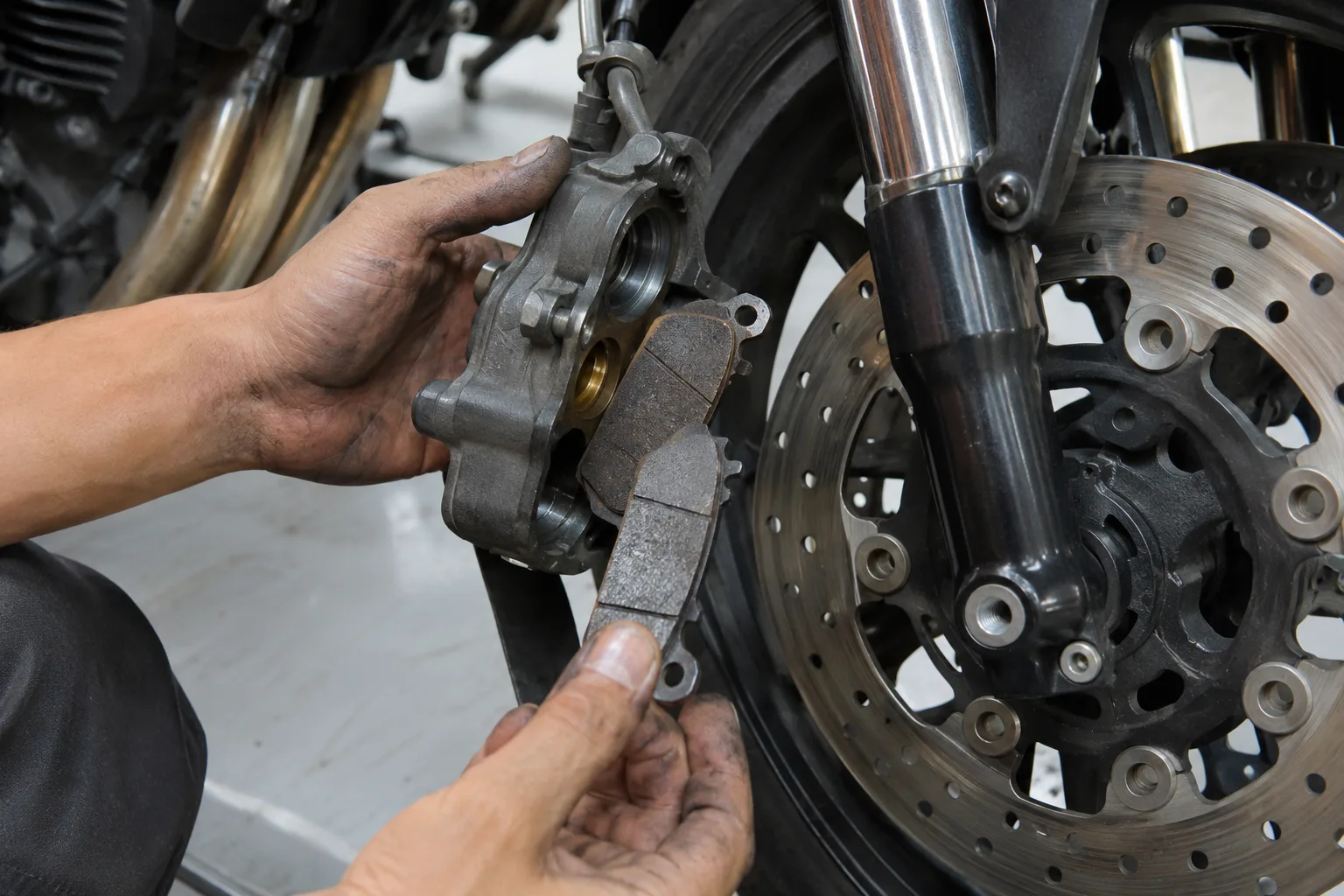
- Consumables as named lines: brake fluid, fork oil, coolant, chain lube, gaskets, filters. These are not shop supplies. They are materials you bought for this bike.
- A fastener allowance on older machines, where exhaust studs and fork caps do not always cooperate.
- Labor at your rates, with a separate diagnostic rate if you charge one.
The three kinds of software shops end up looking at
| Type | Built for | Where it falls short on bikes |
|---|---|---|
| Dealership DMS modules | Franchise service departments with factory flat-rate data and parts catalogs | Priced and scoped for dealers; usually tied to one or two brands |
| General shop management systems | Multi-bay automotive shops: scheduling, inventory, technician time | Car-shaped estimate forms, no teardown or access concept, weak powersports parts data |
| Phone estimate apps | Getting from the bike in front of you to a sendable itemized estimate | Not a full back office; you still need bookkeeping elsewhere |
Plenty of independent shops run a management system for the counter and something faster for quoting. This page is about the quoting end.
What the estimate should come out looking like
An estimate that holds up at the counter reads as a sequence of decisions, not a total. For a fork seal job on a faired bike, that means separate lines for removing the bodywork and front wheel, removing and disassembling the forks, the seals and dust seals as parts, the fork oil as a consumable with a quantity, reassembly, and a torque-and-test line. The customer can see why the seals cost a few dollars and the job costs several hundred.
The same logic applies to a brake job: pads as parts, the fluid as its own consumable line, the bleed as its own operation. Shop price lists in the field commonly show a bleed as a separate $50 to $75 add-on rather than folding it into the pad replacement, which is the right instinct — it is separate work using a separate material.
How Motorcycle Repair Estimator Moto+ handles it
Capture at the bike
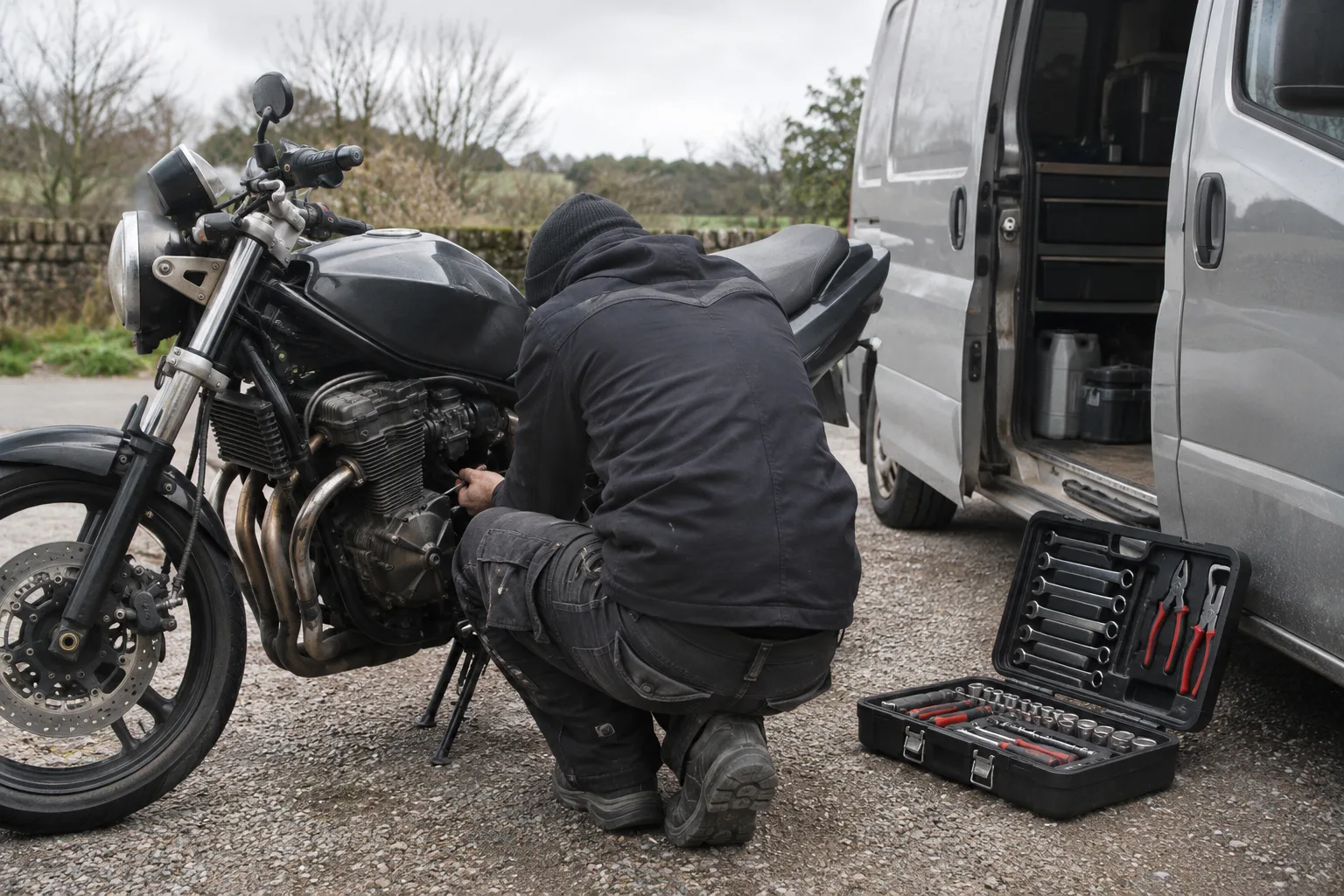
Photograph the machine and the problem, then type or dictate what you found. You are standing there anyway; that is the cheapest moment to write the estimate.
Itemized the way a motorcycle shop thinks
The draft comes back with labor operations listed individually, parts as material lines with quantities, consumables separated out, and a teardown or access line where the job needs one. Nothing gets bundled into a single labor figure.
Your rates per skill
Set your own hourly rates and keep diagnostic time at its own number if that is how you bill. Independent shop rates in published guides generally sit around $70 to $120 an hour, with dealerships in the $125 to $250 range, but the only rate that matters on your estimate is yours. The labor rate calculator works out what you actually need.
Shop supplies as a disclosed percentage
If you bill supplies as a percentage of labor — around 6% is a common shop practice — it belongs on the estimate with the method stated, not appended at invoice time. See motorcycle shop supplies fee for how to present it.
Send it, then invoice from it
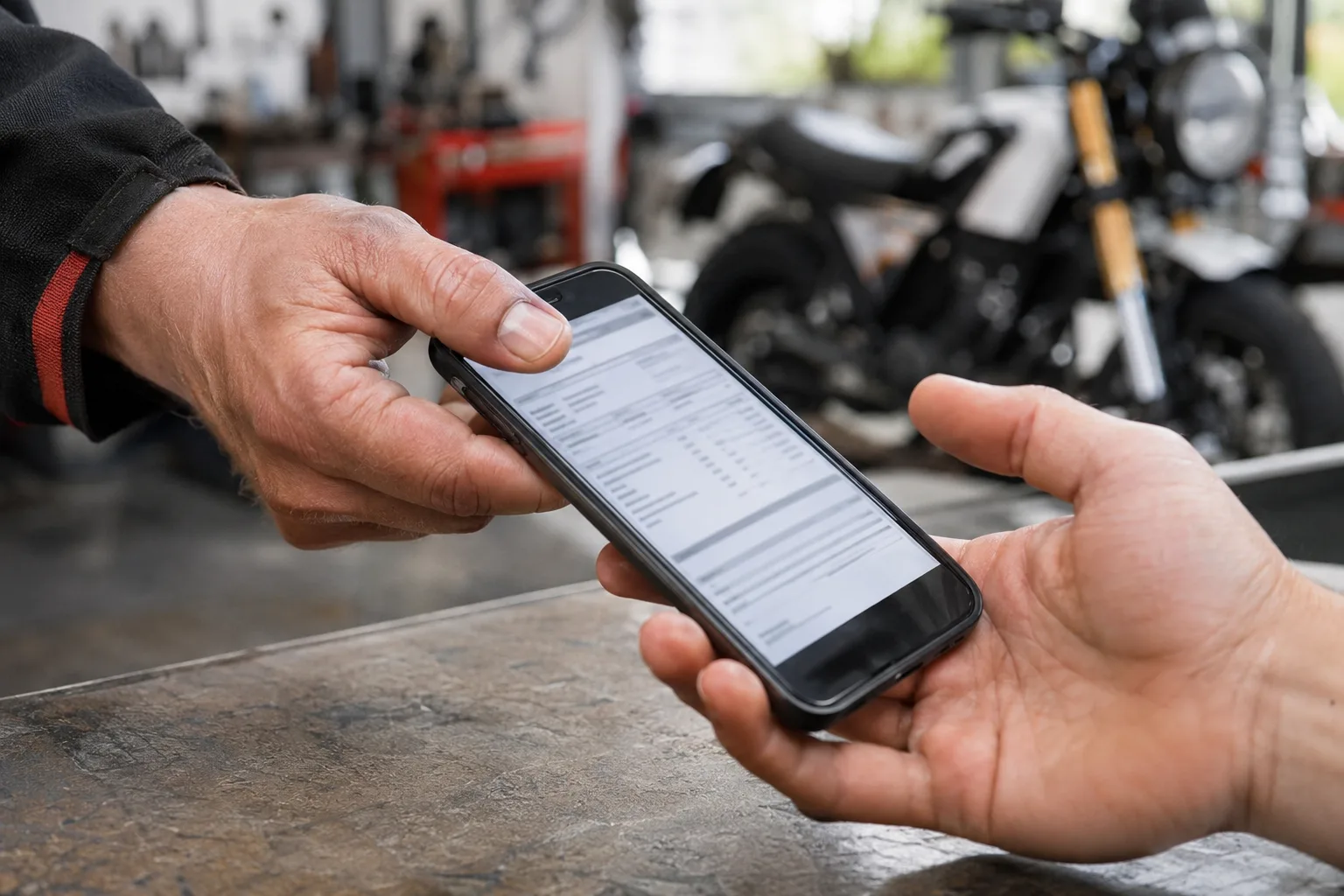
Send as a branded link or PDF. When the customer approves and the work is done, the approved estimate converts to an invoice, so the bill matches what they agreed to.
What to check before you commit to any tool
- Can you add a teardown or access line, and keep it from duplicating across operations under the same bodywork?
- Can consumables carry a quantity and a unit, or does everything have to pretend to be a part?
- Can you set more than one labor rate?
- Does the supplies calculation appear on the customer-facing document?
- Does an approved estimate become the invoice without retyping?
- Can you write a dated addition when teardown finds more, with the original estimate intact?
Flat rate on bikes, honestly
Published flat-rate data for motorcycles is thinner than for cars. Factory times exist for current models inside dealer systems, but independent shops working across brands, model years and a lot of older machinery often cannot look up a reliable book time at all. That pushes motorcycle shops toward their own recorded times on common jobs, with hourly billing for diagnosis and for anything unusual. Software that assumes a book time exists for every operation will fight you; what you want is a tool that lets you store your own times and reuse them. Our labor time guide covers how to build that record.
Where to start
If your estimates currently go out as a text message with a number in it, the quickest improvement is structure, not software. Start with the estimate template and the step-by-step in how to write a motorcycle estimate. If the bottleneck is time rather than format, Motorcycle Repair Estimator Moto+ builds the first draft from a photo and a note so you are editing rather than typing from blank.
Frequently asked questions
Can software write a motorcycle estimate from a photo?
It can write the first draft. A photo plus a short note gives the app enough to list the likely operations, the parts, the consumables and a teardown line. What it cannot do is see inside the engine or know whether the exhaust bolts will come out, so a motorcycle estimate still needs your judgment before it goes to the customer.
Why not just use automotive estimating software?
Automotive systems assume a car-shaped job: panels, refinish hours, a VIN that decodes to a parts catalog with deep coverage. Motorcycle work is organized differently. Access is the biggest variable, bodywork comes off as a unit rather than being repaired panel by panel, and flat-rate data for bikes is far thinner than for cars. Car software tends to have no sensible place for a teardown line or a fork oil line.
Does the app handle teardown as a separate charge?
Yes, and it should. Teardown on a motorcycle is real labor that happens whether or not the repair goes ahead, and fairing removal is charged once for everything underneath it rather than once per operation. Both belong on the estimate as named lines the customer approves.
Are these estimates binding quotes?
No. They are informational itemized estimates. Whether a given number becomes a firm quote is your call and your state's rules, and anything found after teardown needs a written, approved addition before you do the work.
Estimates and invoices in minutes
Motorcycle Repair Estimator turns a photo into an itemized estimate, then an invoice. Free to download.
More in for shops