The app for mobile motorcycle mechanics
Updated 2026-11-07 · By the Motorcycle Repair Estimator team
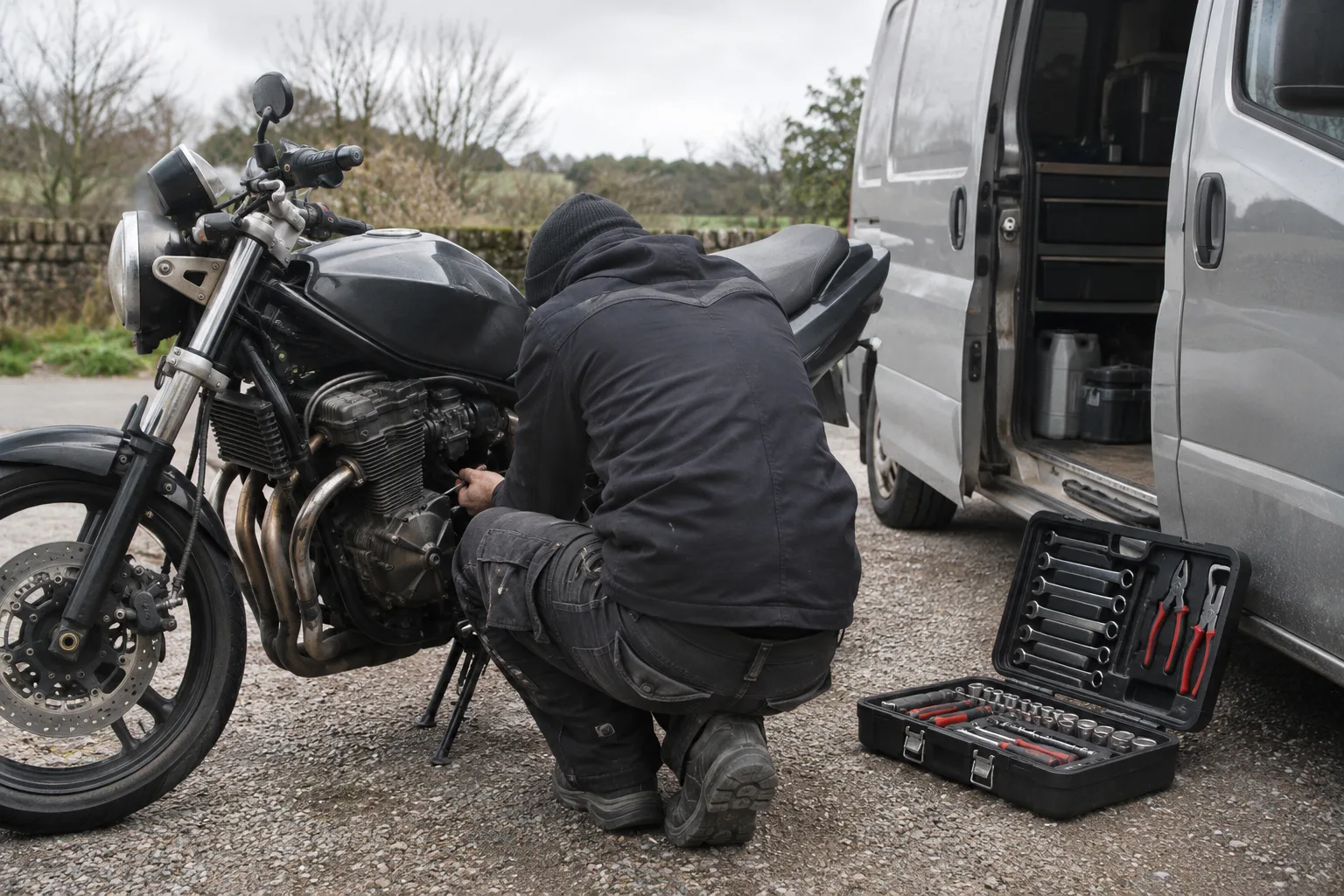
A mobile motorcycle mechanic quotes with less information than a shop does and has to be more right about it. There is no lift, no second technician to ask, and no option to leave the bike apart overnight while a part arrives. The estimate you write in the driveway is the estimate you live with, so the structure of it matters more than it does in a shop.
The estimate is the whole job
In a shop, a loose estimate gets corrected by the next conversation at the counter. On a mobile job you are usually on site once, with the customer standing next to you, and any change in scope is a decision made right there. The estimate has to be built so that changes are easy and documented rather than awkward.
Three habits do most of the work:
- Quote the visit, then the repair. For anything undiagnosed, the first estimate covers the call-out and the diagnostic time with a not-to-exceed. The repair gets its own estimate once you know what it is.
- Write the access assumption down. "Assumes bodywork panels come off intact and fasteners release without heat" is a sentence that pays for itself the first time it does not.
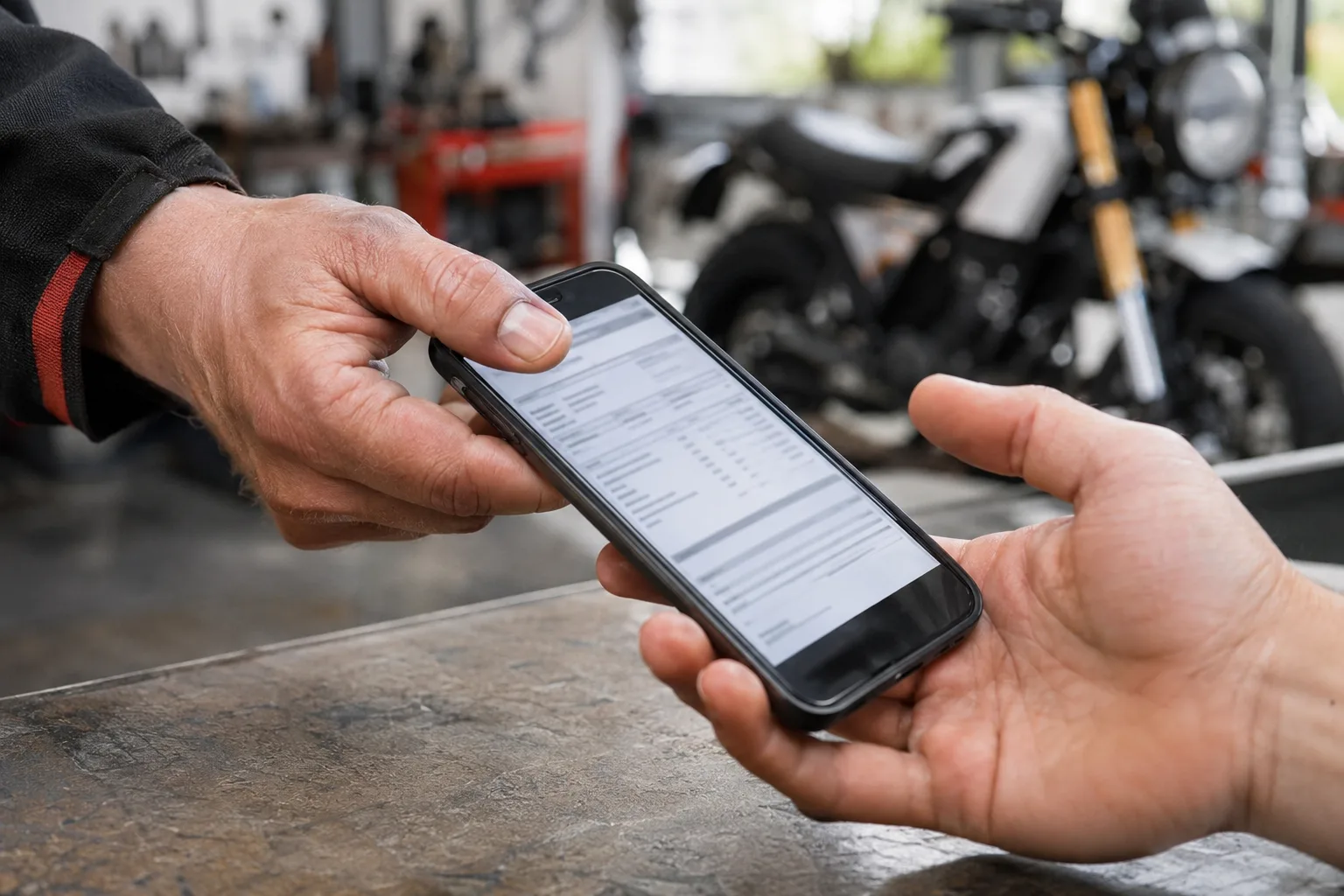
- Get approval in writing, on the spot. A link or PDF the customer taps is faster than a conversation you will later remember differently.
Lines a mobile estimate needs that a shop's does not
| Line | Why it exists |
|---|---|
| Call-out or travel | The drive is real cost. A flat fee inside a radius plus a per-mile rate beyond it is the simplest version to explain |
| Minimum labor charge | A fifteen-minute job an hour away is not a fifteen-minute job. State the minimum before you leave |
| Site conditions | Gravel driveway, no power, no shelter. Either you decline, or you price the extra time and say why |
| Return visit | When a part has to be ordered, the second trip is a second call-out unless you choose to absorb it. Decide in advance, not afterwards |
| Disposal | Used oil, coolant and brake fluid leave with you. That has a cost and a destination |
Everything the shop pages say still applies
The structural rules of motorcycle estimating do not change because the van replaced the bay:
- Teardown is billed separately, and on a mobile job it is riskier, because a bike stripped in a driveway cannot stay stripped. If the job might not be finishable on site, say so and price the reassembly.
- Fairing removal is charged once for all work underneath, and it is the best argument you have for doing the plugs and the air filter while you are in there.
- Consumables are their own lines. Brake fluid, fork oil, coolant, chain lube, gaskets and filters each carry a quantity. You carried them to the job; bill them.
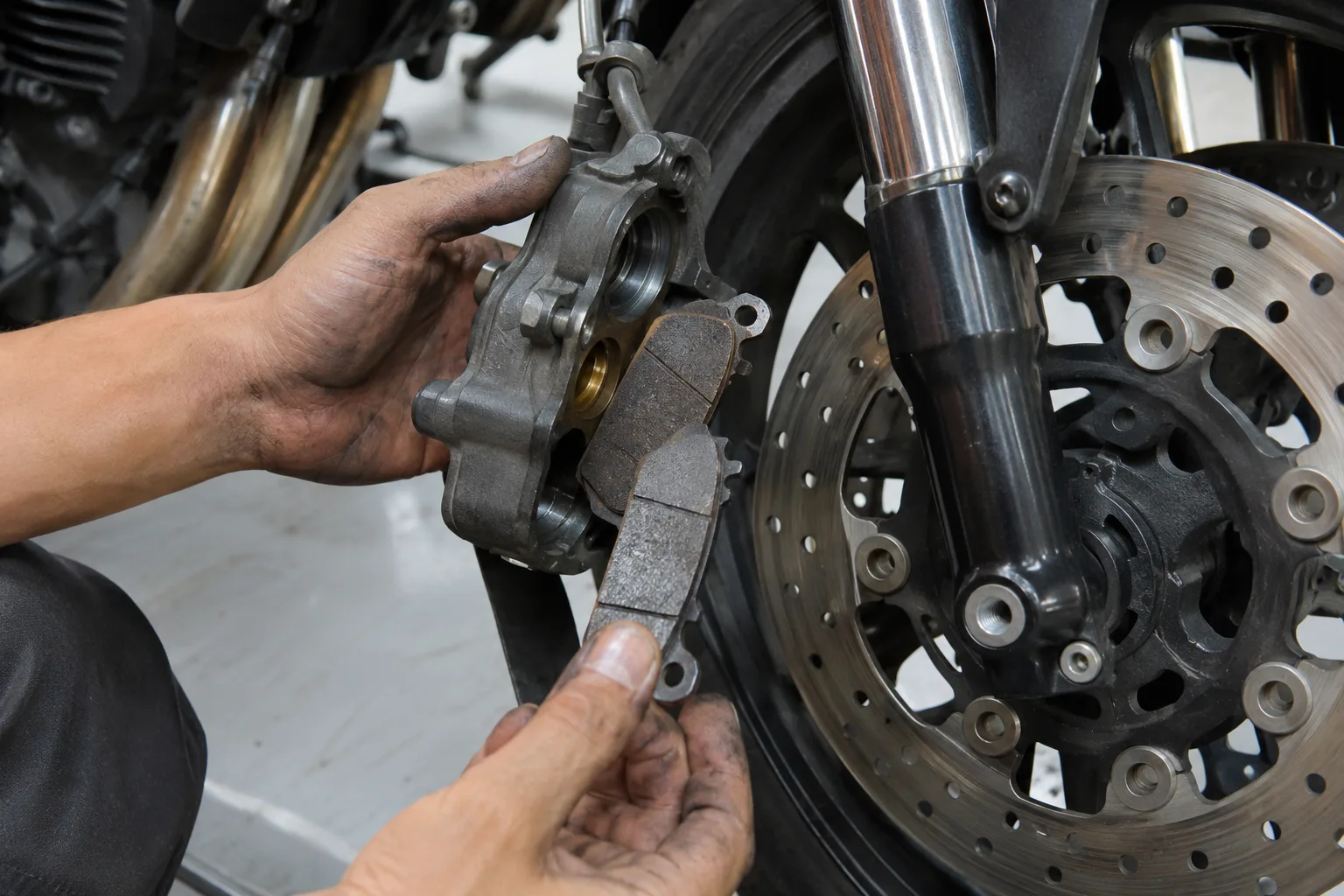
- Parts are material lines, never bundled into labor, with the type stated. On brakes, tires and suspension that part choice is a safety conversation, not a price conversation — see OEM vs aftermarket motorcycle parts.
- Allow for seized fasteners on older machines, and more generously than a shop would. You do not have the shop's heat, press and stock of replacement hardware.
- Supplies as a percentage of labor, commonly around 6%, disclosed on the estimate with the method named.
Pricing when you cannot look up a time
Published flat-rate data for motorcycles is thin, and thinner still for the mixed, older machines mobile mechanics tend to see. Build your own record instead: after every job, write down the actual hours against the operation and the model. After a season you will have better times for your work than any general guide, including the access time for the bikes you see most.
Until then, quote hourly with a range and a not-to-exceed on anything you have not done before. For orientation on rates, published guides put independent motorcycle shop labor around $70 to $120 an hour, with dealerships roughly $125 to $250 and about $130 an hour commonly quoted. Mobile work carries different costs — no rent, but fuel, vehicle, insurance and a lot of unbilled driving — so run your own numbers through the labor rate calculator rather than copying a shop rate.
How the app fits a mobile day
Quote before you drive
Ask the customer to text photos of the bike, the problem and the VIN plate. Build the estimate from those, send it as a branded link, and confirm the diagnosis when you arrive. For well-defined service work this converts a phone conversation into an approved job before you turn the key.
Write the estimate at the bike
Photograph the problem, add a note or dictate what you found, and Motorcycle Repair Estimator Moto+ returns an itemized draft with labor by operation, parts as material lines, consumables separated out and a teardown line where the job needs one, at your own rates. Edit the hours against what you are actually looking at, then send it.
Invoice before you leave
When the work is done, the approved estimate converts into an invoice with the same lines and totals, sent as a link or PDF while you are still packing up. That is the difference between getting paid on site and spending the evening writing invoices.
Keep a history per machine
Each bike keeps its estimates and invoices together with mileage. When a customer calls next season about the same noise, you know what you did, what you used and what you noted as deferred.
The deferred-work note
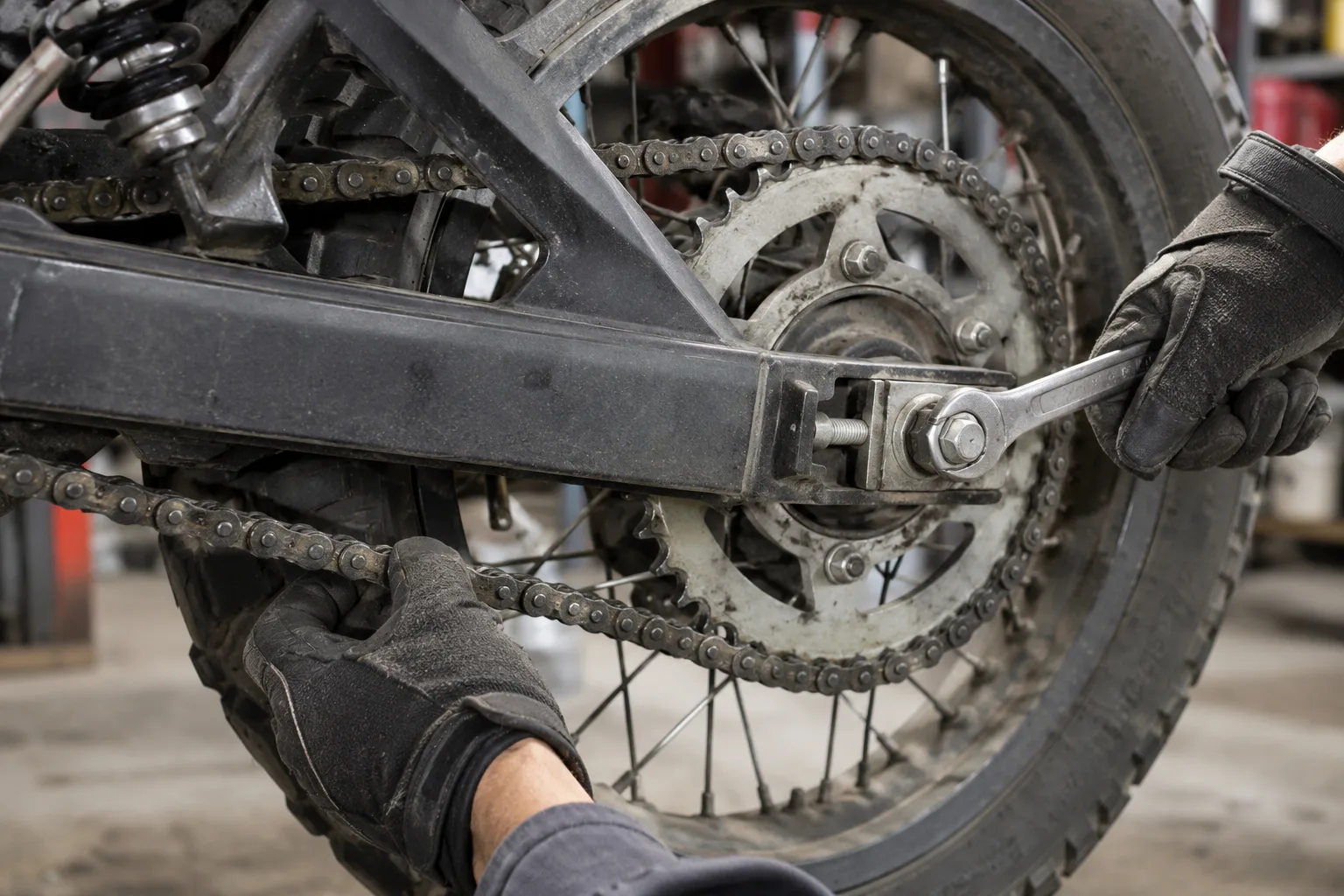
Mobile mechanics see things the customer has not asked about: a chain at the end of its adjustment, a tire near the wear bars, fork seals weeping, brake fluid gone dark. Record those on the job, in writing, with no pressure attached. It is the most honest form of marketing available to you, and it becomes next season's estimate.
For the full write-up method, read how to write a motorcycle estimate. If you want a blank form for the clipboard instead of an app, start with the motorcycle estimate template.
Frequently asked questions
What can a mobile motorcycle mechanic realistically do on site?
Service work and most bolt-on repairs: oil and filter, chain and sprockets, brake pads and fluid, battery and charging diagnosis, carburetor and throttle body work on accessible machines, tires if you carry a wheel balancer, and plenty of electrical diagnosis. Engine internals, anything needing a lift to get the wheels off the ground safely, and press work belong in a shop.
How do you price travel?
As its own named line, decided before you drive. Common approaches are a flat call-out fee inside a radius, a per-mile rate beyond it, or a minimum labor charge that absorbs the first part of the trip. Whichever you pick, put it on the estimate so the customer is not surprised when a twenty-minute job carries a bigger number.
Can you quote from photos before driving out?
For well-defined work, usually yes. Ask for photos of the bike, the problem area and the VIN plate, plus the odometer. Say clearly on the estimate that it covers what the photos show and that you will confirm on site before starting. For an unknown noise or a non-running bike, quote the diagnostic visit only.
Do mobile motorcycle mechanics need a license?
It depends on your state and city. Some states register automotive and motorcycle repair businesses, including mobile ones, and local business licensing is separate. Check your state's automotive repair or consumer protection agency and your city or county licensing office before you take work.
Estimates and invoices in minutes
Motorcycle Repair Estimator turns a photo into an itemized estimate, then an invoice. Free to download.
More in for shops